
'We are trying to salvage 50-100 million doses of Covishield with the latest drive on booster doses.'

A disagreement between mobile operators and device manufacturers over e-SIMs has reached the government with the Cellular Operators Association of India (COAI) asking the DoT to order handset manufacturers to introduce eSIMs, in addition to the physical SIM slot, in all smartphones costing over Rs 10,000. The reason is the unprecedented global shortage of semiconductors which has severely impacted the supply of SIM cards across the globe and pushed up the price by four to five times. The shortage is not likely to improve before 2024.
Reliance Jio's decision to acquire 700 MHz in combination with the possible use of an advanced standalone (SA) 5G network could give it an edge over its rivals, according to most analysts. The dissenters argue that the stiff price tag touching Rs 40,000 crore to grab 10 MHz of spectrum in 700 to provide coverage for its SA 5G network which offers ultra-low latency (unlike non-standalone or NSA), has a long way to go in India in terms of finding use cases that can be monetised. Globally, 700 MHz is a pivotal band which provides huge coverage, indoor penetration (especially useful in India where walls are thick) and is already considered by the European Union to be the 'pioneer band' for 5G, with 3.5 GHz and 26 GHz, both of which were auctioned in India recently.

With Chinese companies Huawei and ZTE excluded from participating in the 5G roll out, their absence leaves a vacuum in the market which will have to be filled by three vendors: Ericsson, Nokia and Samsung.
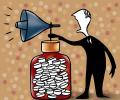
Bulk of the medicine sales in the $22-24 billion domestic pharma market happens through offline retail chemists. With the entry of online pharmacies, this space has started to witness a shake-up. Sample this: Dawaa Dost, a Rajasthan based digital health start-up, generates medicine orders from 'kirana' stores and women self-help groups (SHGs) that operate in villages, and then service these orders through its affiliated network of pharmacies. Biddano, another health-tech start-up, has a platform that acts as an aggregator for neighbourhood chemist shops.

US hedge fund Tiger Global and Japanese investment giant SoftBank have trimmed their investments in Indian start-ups by over a third - from $3.8 billion in the second half of 2021 to a mere $1.08 billion in H1 2022, according to data from Venture Intelligence. While SoftBank's investments in India dropped from $1.9 billion in H2 2021 by more than a fifth to only $0.33 billion in H1 2022, that of Tiger Global fell from $1.92 to $0.74 billion in the same period. Private equity (PE) fund trackers point out that this year most of the deals that Tiger Global has invested in are in the early stage (up to series D), and only a few are in the series E and above.

Apple's three vendors in the country have hit the milestone of creating 30,000 new direct jobs since the production-linked incentive (PLI) scheme for mobile devices kicked off in April 2021. Based on the government's estimate that one direct job in the electronics industry helps to generate three indirect ones, Apple's vendors, Foxconn Hon Hai, Wistron and Pegatron, are close to creating 100,000 direct and indirect jobs. The direct jobs that the vendors have created account for a fourth of Apple's commitment to generate 60 per cent of the new direct jobs out of the 200,000 jobs targeted by the government under the PLI scheme within five years.

Seven of Bollywood's big stars (Akshay Kumar, Ranveer Singh, Ajay Devgn, Varun Dhawan, Saif Ali Khan, John Abraham and Shahid Kapoor), who had 10 movies released with a collective budget of Rs 1,100 crore since December, could rustle up only around a third of that money at the box office.

Telcos participating in the upcoming auctions at the end of July say they expect only a fourth of the value of spectrum on offer to be sold. The government has put Rs 4.3 trillion of spectrum up for sale at the base price across seven bands including for 5G. An executive of a leading telco said he estimates that mobile operators collectively would buy spectrum of only around Rs 1.1 trillion.

Will open radio access network technology (O-RAN) disrupt the way 5G networks roll out in the country? After all, it promises to offer a substantially lower capital cost, enables the choice of an array of vendors, and provides more network flexibility - all very important for telcos who expect to invest over Rs 60,000 crore to roll out a pan-India 5G network and that's without spectrum costs. But more importantly, it counters the stranglehold of global telecom gear makers such as Ericsson, Nokia, and Samsung over telcos to whom they sell propriety technology and bundled hardware and software.

Elon Musk's decision to drop the idea of acquiring Twitter over purported under-reporting of fake accounts due to the use of bots has opened a can of worms on what is a growing and crucial problem - advertisers who put in money based on these falsified numbers (which is the mainstay revenue of these platforms) are making losses; they are paying for bots in the guise of viewers. mFilterIt - a global digital and advertising (ad) fraud detection and protection company in India - says search engines like Google have the lowest average ad fraud rate of 10-12 per cent, based on the inference arrived at while working with clients that use these platforms. This means 10-12 per cent of the ad viewership is generated by machines.

India's medical devices imports surged 41 per cent to touch Rs 63,200 crore in 2021-22, led by a 48 per cent year-on-year (YoY) jump in imports from China to Rs 13,538 crore, the commerce ministry data analysed by the Association of Indian Medical Device Industry (AiMeD) has showed. Local industry players say this has led to several small and medium units to shut shop. Rakesh Vaid of Usha Fabs, a garments exporter, had started making N95 masks in his Gurgaon factory during the peak of the Covid-19 pandemic.
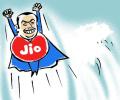
With the Adanis submitting an earnest money deposit (EMD) of just Rs 100 crore on Monday for the upcoming 5G spectrum auction, the apprehension among the rivals that the group is nursing ambitions of being an all-India mobile player has been allayed at least for now. Based on its EMD, analysts say it can buy spectrum worth just Rs 900 crore, whose use will be limited to enterprises and captive networks -- that too is likely only in a few circles where it has its infrastructure like ports, airports, and power stations. While getting all-India millimetre band spectrum of 400 MHz (which costs Rs 2,800 crore) is ruled out, it might choose circles like Gujarat and Mumbai to start with.

In the late 1990s, Japanese electronics brand Aiwa tied up with a maverick entrepreneur, Kabir Mulchandani, to sell its consumer electronic products. Founder of Baron International, Mulchandani, all of 26 at that time, had already disrupted the television market through a tie-up with another Japanese player, Akai. With a strategy that relied on heavy discounts, exchange offers and freebies, Akai was selling in huge volumes.

The central government has for the first time allowed a private company, Bajaj Healthcare, to process opium to extract alkaloids used to make pain-killers, cough syrups, and even cancer drugs. Two government factories in Ghazipur, Uttar Pradesh, and Neemuch, Madhya Pradesh, do the work yet, processing some 800 tonnes of opium gum annually to extract alkaloids. The government on Tuesday gave Thane-based Bajaj Healthcare an initial contract to process 500 tonnes of opium gum annually and wants production to be at 800 tonnes per annum (tpa) in the next five years, indicating the state's exit from the highly-regulated sector.

Akash Ambani's first big job as he takes over as chairman of Reliance Jio, the group's telecom arm, is a no-brainer - he has to get his company through the long-awaited 5G auctions that are a few weeks away. But his bigger job, analysts said, will be to lead the transformation of the telecom company into a tech giant, a process that is underway as it seeks to list in the US. Insiders said there has been plenty of debate within the company's top executives on the auction strategy.

'Kartik is an outsider, so he takes nothing for granted. That's why he will do well.'

The industry may account for just 0.05 per cent of the total volume of single-use plastics in the country. And the product it uses is just one among the 22 - including spoons, forks, plates, knives and trays - that will be banned across the country from July 1 by government order. Yet, it is the plastic straw that is at the centre of public focus as fast-moving consumer goods (FMCG) companies make a last-ditch effort to get the government to extend the deadline.
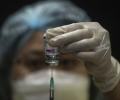
Pune-based Serum Institute of India (SII) is sitting on 200 million doses of Covishield that were manufactured in December and are set to expire in September. The company is likely to destroy these vaccines if nothing works out, Sohini Das reports.

'We showcased about 20 use cases in 5G trials in Pune and Gandhinagar and some of them were interesting and innovative.' 'However, which ones will take off and which ones would not be relevant, we don't know yet.'
